The first rain in a new house
Many owners in Orange discover their chimney leaks the same way: the first proper storm of their first winter, and a brown mark appears on the drywall near the fireplace. It is unsettling, especially in a house you have only just bought. The good news is that chimney leaks are common, they are usually traceable, and most are repaired without tearing anything apart. This post explains where the water tends to get in, what the repair costs with us, and what decides where in the range your house lands.
Where a chimney lets water in
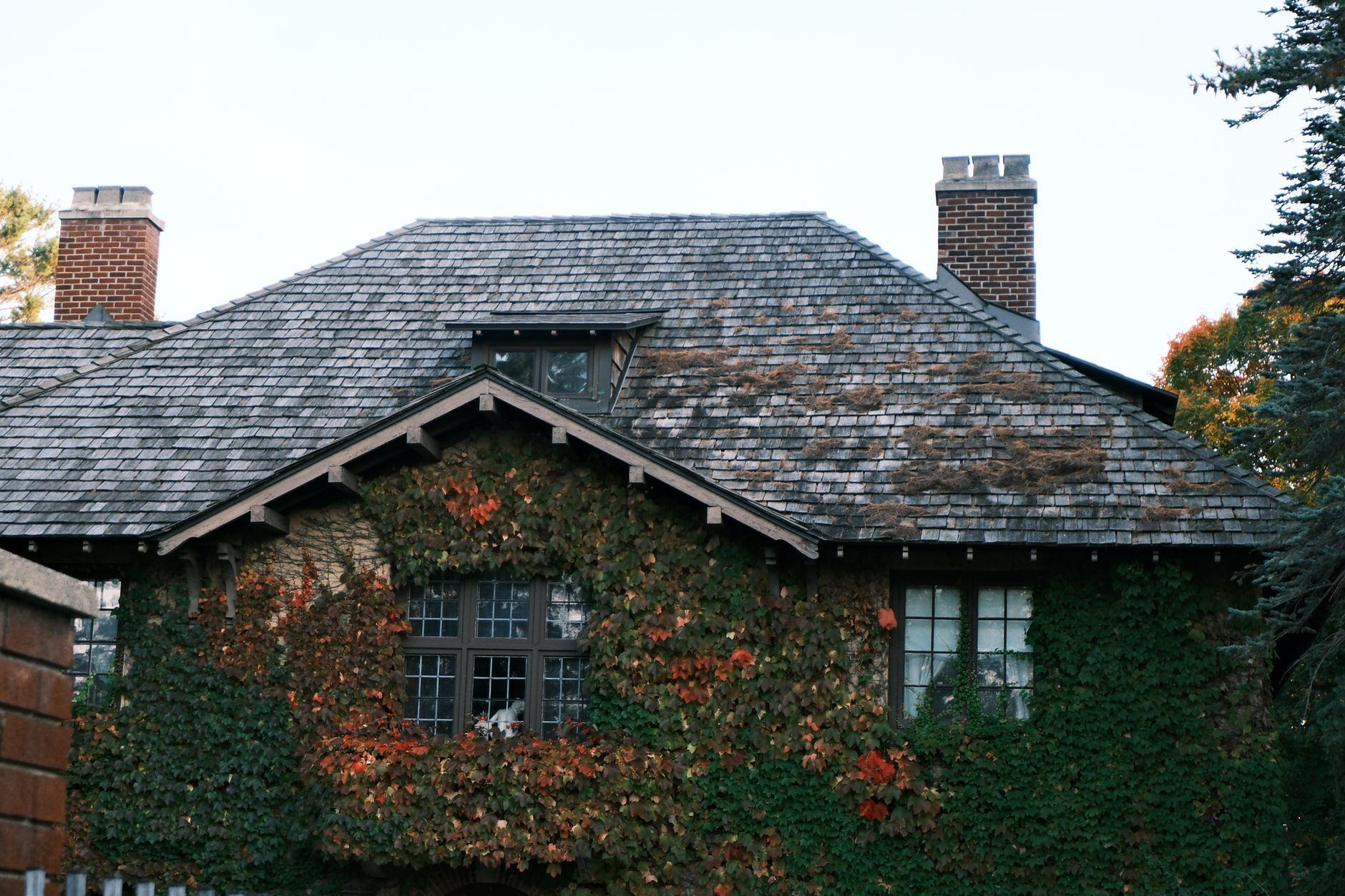
A chimney is a tall object standing in the rain with a hole in its top and a seam where it meets the roof. Water has several ways in, and each part has a name worth knowing:
- The crown. The concrete slab across the top of a brick chimney. Sun and cold make it crack over the years, and each crack lets rain into the brick underneath.
- The cap. The metal hood over the flue opening. Without one, rain falls straight into the flue.
- The flashing. Bent sheet metal sealing the seam between chimney and roof. When it lifts, rusts or loses its sealant, water slips through the gap.
- The brick and mortar. Old mortar joints wear away and brick soaks up water. On a stucco or siding chimney, the matching problem is a rusted metal top called a chase cover.
- The cricket. On a wide chimney, a small ridge built on the roof behind it to split the water. Without one, water piles up behind the stack and finds the weakest spot.
Most leaks have one main source. Some have two. The visit is about finding which.
How we find the source
We start inside, at the mark. Its position, its size and whether it darkens during the rain or a day after all narrow down the cause. Then we go to the attic, if there is one, and look at the framing and the brick where the chimney passes through. Then the roof, part by part.
When the cause is not obvious, we test. Water is applied to one part at a time while we watch below for it to appear, so we are not guessing between the crown and the flashing.
What the repair costs
These are our published figures for the leak repairs that have a price. Anything else is written up as its own quote once we have seen it.
| Repair | Our price |
|---|---|
| Finding the source and fixing it | $595 to $3,550 |
| Rain hood over the flue, fitted | quoted after we measure |
| Water diverter on the high side of a wide chimney | $475 to $1,070 |
| Diverter plus fresh metal at every roof seam | $710 to $1,750 |
Crown repair, waterproofing and chase cover replacement have no list price. The job depends on the size of the top, the state of the concrete and what is underneath, so each one comes as a written scope after the visit.
What decides where in the range you land
The low end of the leak range fits one clear source, fixed in one visit. Prices move up when:
- The water has more than one way in, for example cracked concrete on top and loose metal at the roof seam.
- The chimney is tall, the roof is steep, or it is clay tile, which takes more care to walk and to lift.
- Mortar joints across a whole face have worn and need repointing before anything else will hold.
- Wet framing or insulation inside has to be dealt with as part of the fix.
We tell you which of these apply, show you the photos, and write the price before any work begins.
Use the quote form and note one thing for us: does the mark darken while it is still raining, or a day or so later? That detail alone often points to the crown or the flashing before we climb up, and we will say on the call back what the visit is likely to find.
What not to put off
Water in a chimney rarely stays where it starts. It rusts dampers, crumbles mortar and, in a framed chimney, rots the wood behind the siding. A small leak is a contained repair. A leak that runs for three winters is often a bigger one. If you see a stain this season, have it traced before the next storm.
That said, not every mark is urgent. If the stain is old, dry and has not grown since you moved in, it may be from a leak the previous owners already fixed. The trace will tell you.
If you bought the house recently
A leak that shows up in the first months after closing sometimes traces back to something the seller could have known about. Fresh paint over a ceiling patch near the chimney is one hint. If that is your situation, keep the report and photos from our visit with your purchase papers. We write down what we found and where, in plain terms, without guessing at who knew what. That record is useful whatever you decide to do with it, and it also gives the next company that works on the roof a clear starting point.
The services behind each fix
Each repair has its own page if you want to read more: chimney leak repair, crown repair, flashing repair, cap installation, waterproofing and chase covers. If a sale is involved, our up to code repairs page covers which of these need a permit.
If you are new to the house and want the whole chimney looked over while we are there, the first chimney inspection cost explains the two inspection levels.
When water shows up near the fireplace in your Orange home, the contact page gets a visit on our calendar.
Rather Have Someone Look at Yours?
Hatcher Chimney Services books first inspections, cleanings and sweeps from Orange to Garden Grove, Placentia, Costa Mesa and the rest of our list, and explains every finding in plain words.